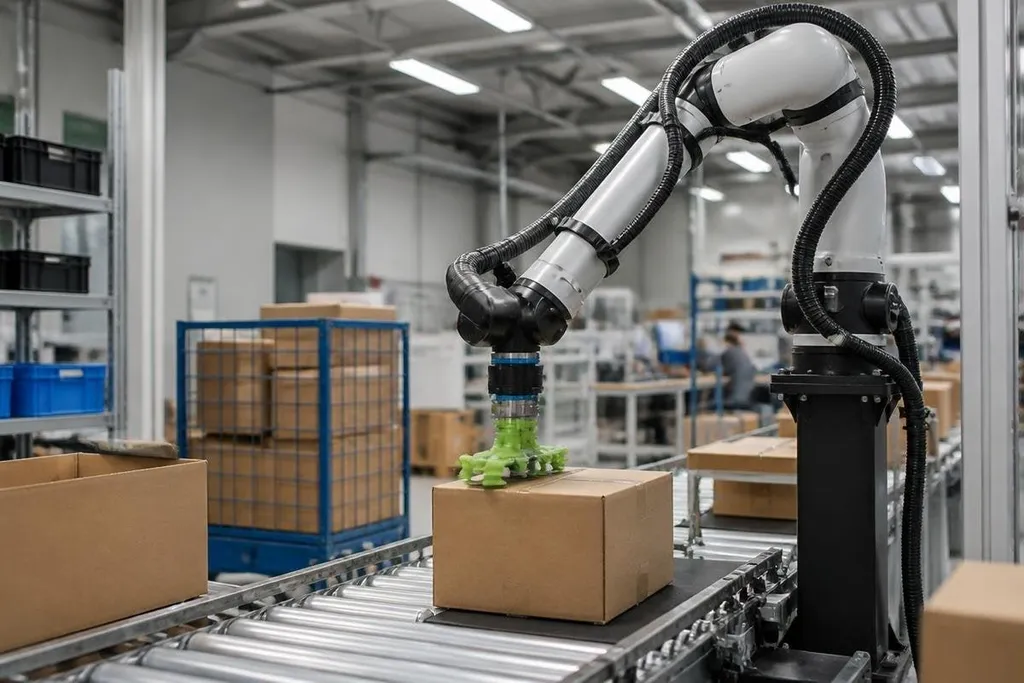
A fixed robot can repeat the same motion for years. A flexible robot is built for work where the object, task, or workspace changes often, using sensors, software, modular parts, or soft materials to adjust its actions.
- Flexible robots can change grip, path, or tool as the task changes.
- Soft grippers handle objects that rigid fingers may crush or drop.
- The trade-off is clear: more flexibility can mean slower motion, harder setup, and less predictable results.
What makes a robot flexible
Flexibility starts with the robot’s physical design. A soft gripper can bend around an object instead of closing with one fixed shape. Cable-driven arms can place motors away from the joints, which makes the arm lighter or easier to fit into a tight space.
Modular robots take another route. Their parts can be moved, replaced, or joined to suit a new task. A company might use one arm length for a small work cell, then add reach or a new end effector, the tool at the end of the arm, for a different job.
Software matters just as much. A robot with force sensing can detect contact and change how hard it pushes. A camera can help it locate an object that has shifted on a tray, while motion planning works out a new path around nearby equipment.
That adjustment only helps when the robot can sense the change. A flexible design without good sensing is still guessing.
Why factories need this approach
Many automation cells work well when every part arrives in the same position. That condition becomes harder when product batches are small, packaging changes often, or people and robots share the same work area.
The robot can reduce the need for a new mechanical setup each time the job changes. The benefit may come from a new gripper, a software change, or a different camera position rather than a whole new cell.
This matters to a plant manager with several product lines and limited engineering time. If a new task needs weeks of mechanical work, automation may cost more than manual labor. If the same robot can be reset with a tested tool and a new program, the calculation changes.
The machine still needs clear limits. A camera may lose track of a shiny object. A soft gripper may lack the force needed for a heavy part. A robot arm may reach the work area but lack the stiffness to hold a tool steady during cutting or drilling.
A flexible robot earns a place on your line only when its movement changes the task result. Dated factory robot test reports can tie that claim to a named machine, work setting, and measured result. I'd count the setup time too, because a robot that needs repeated adjustment may cost more than its price suggests.
Where flexibility costs more
Flexible hardware often adds parts that need tuning.
Force sensors need calibration. Cameras need stable lighting and a clear view. Software needs test cases for objects that may arrive in different positions or shapes.
The work shifts between the factory floor and the engineering desk, but it does not disappear. A robot that handles ten known parts may need new data and new checks when an eleventh part enters the line.
Speed can fall too. A rigid arm following one proven path may move faster than a system that checks force, updates its position, and avoids people or equipment. For a task repeated thousands of times, that gap can decide whether flexible hardware earns its cost.
Safety adds another limit. A robot that changes its path needs clear rules for stopping, sensing people, and recovering from an error. The safety case must cover the robot’s normal task and the unusual positions created by its flexible behavior.
I’d choose a flexible robot when product change is frequent enough to pay for the extra setup work. For one stable task, a fixed machine is usually easier to tune and run.
A practical buying check
Before choosing a flexible robot, check these points:
- Task changes: List the parts, tools, and positions the robot must handle during one production run.
- Sensing needs: Decide whether cameras, force sensors, or contact switches can detect those changes.
- Setup time: Measure the time needed to change a tool, load a program, and check the first part.
- Failure recovery: Write down what the operator does after a dropped part, blocked camera, or failed grasp.
- Proof at the work cell: Test the robot with real parts, lighting, trays, and cycle times before placing an order.
The last point deserves the most weight. A flexible robot earns its place when it handles the changes that cause downtime today, while keeping setup and safety work within the plant’s limits. The next useful measure is simple: how many product changes can the system handle before a technician must rewrite the process?